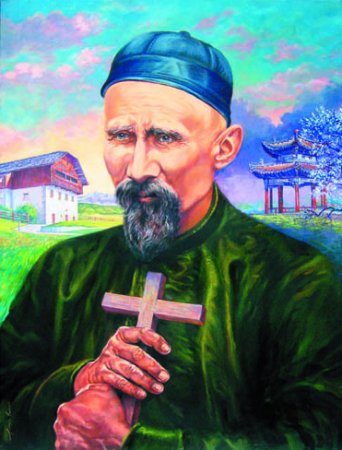
Feast of Saint Matthias the Apostle
Noong ako ay nagtuturo sa isang university ng SVD, isa sa mga pinagawa ko sa mga estudyante ay ang i-dramatize ang “washing of the feet” at ang “last supper.” Sa isang grupo, kung saan napunta ang assignment na ito ay tuwang-tuwa ang mga estudyante habang nag-aasign sila ng mga tao na gaganap. Ang isang estudyante na naassign bilang Jesus ay tuwang-tuwang, pakiramdam niya ang bait bait niya. Yong isa naman na gaganap na Pedro ay nagyayabang at ginagagaya si Pedro na astig ang dating. Maya-maya ay biglang nagkagulo. Isang estudyante ang sumigaw, “Ayoko! Ayoko niyan!” Ako ay nagulat kaya nilapitan ko na sila. “Anu ba ang nangyayari at bakit nagsisigaw yan si Jayson?” tanong ko sa kanila. Dali-daling sumagot si Jayson “Eh kasi po, si Lenny, pinipilit akong maging Hudas”
Sa mga Apostol, karaniwang inaayawan si Hudas dahil sa kanyang pagtataksil kay Hesus. Kaya malimit marami ang ayaw gumanap na ika-12 Apostol, bilang Hudas. Subalit, para sa mga Apostol mahalaga ang bilang na 12, kaya kailangan nilang humanap ng kapalit ni Hudas. At ito ay isang seryosong bagay na pinagukulan ng panahon at malalim na panalangin ng mga Apostol. Sa katunayan, ang unang gawa ng mga Apostol matapos umakyat sa langit si Hesus ay ang maghanap ng kapalit ni Hudas. 121 silang lahat na dumalo at nanalangin para piliin ang ika-12 Apostol. Paano nga ba nila pipiliin ang ika-12 Apostol.
Si Pedro ang tumayo at nagbigay mungkahi ng paraan para piliin ang papalit kay Hudas. Para kay Pedro ang papalit kay Hudas ay kailangang isa sa mga kasama ng 11 mula noong si Hesus ay binyagan sa ilog Jordan hanggang sa si Hesus ay umakyat sa langit. Dalawa mula sa naroon ang kasama nila noon pa man. Si Matthias at si Jose na tinatawag ding Barsabbas. Hindi naging madali sa mga Apostol ang pumuli ng ika-12. Kilala nila pareho sina Matthias at Jose na mabubuti at nagmamahal ng lubos kay Hesus. Di nila malaman kung sino ang pipiliin. Kung sila man ay pipili, ito din kaya ang pipiliin ng Panginoong Hesus? Kaya minabuti nilang magsapalaran. Anu man ang resulta nito, naniniwalang silang ito ang kalooban ng Diyos. Sa kanilang pagsapalaran, si Matthias ang lumabas na ika-12 Apostol. Sa buong Bibliya, ito ang una at huling pagkakataon na si Matthias ay nabanggit.
Anong mga katangian mayroon ang mga Apostol para sila ay piliin? Ayon kay Clement ng Alexandria, si Matthias ay pinili ni Hesus hindi dahil kung anong mayroon siya, kundi kung magiging anu siya. Pinili si Matthias ni Hesus hindi dahil siya karapadat-dapat na mapabilang sa hanay ng mga Apostol kundi binigyan siya ni Hesus ng biyaya upang maging karapat dapat. Ang biyayang ito ay ang lakas ng loob na ipahayag ang mabuting balita ni Hesus sa lahat ng tao buhay man ang maging kapalit nito. Kaya tulad ng iba pang mga Apostol si Matthias din ay nag-alay ng kanyang sariling buhay sa ikalalaganap ng mabuting balita.
Di lamang mga Apostol o mga Pari ang pinili ng Diyos. Sa katunayan lahat ay inaanyayahan ng Diyos. Ikaw, ako, tayo ay pinili ng Diyos. Hindi dahil tayo ay karapat dapat na mapabilang sa kanya, kundi dahil minarapat niya, gusto ng Diyos na tayo ay makapiling niya, kaya gumawa siya ng paraan upang tayo ay mapasakanya. Ito ang dahilan kung bakit naparito at nakipamuhay kasama natin ang Anak ng Diyos, si Hesus.
Para sa mga Apostol ang pagsunod kay Hesus ay hindi naging madali kundi puno ng hirap. Sa katunayan, ibinihos nila ang kanilang dugo, sila ay nag-alay ng buhay. Kaya, sa mga pagkakataong tayo ay sinusubok ng hirap sa pagsunod kay Hesus, nawa ang buhay ng mga Apostol ang mgbigay lakas sa atin ng loob at pag-asa na manatili sa piling ng Diyos.
Miyerkules, Mayo 14, 2008

Martes, Mayo 13, 2008
Tuesday Week 6 Ordinary Time
Watch out, guard against the leaven of the Pharisees and the leaven of Herod
Noong ako ay nasa college seminary diyan sa Christ the King, pag bakasyon kami ay pinauwi din ng mga pari. Kaya nakikita ko uli ang mga dati kong barkada noong high school. Isa sa mga malimit kong pasyalan ay si Mae. Naalala ko noong high school kami, ito si Mae ang “apple of the eye” ng aming mga teachers kasi siya ay magalang, tahimik sa klase, di nalalate, walang bisyo, sempling manamit, malinis, sa medaling sabi, siya ay dalagang Pilipina.
Ako ay enjoy na enjoy na pumunta sa kanila kasi, tuwing bakasyon merong bago sa kanya. Noong unang bakasyon, napansin ko, umikli ang kanyang damit na isinusuot. Nang sumunod na bakasyon, may kulay na ang kanyang buhok. Nang mga sumunod na bakasyon, dumami ang kanyang hikaw. Minsan tinanong ko siya, “bakit ganyan na ang itsura mo? Ang sagot niya, “Tol, ito na ang uso ngayon! Ikaw kasi lagi kang nakakulong sa seminaryo, kaya tuloy di ka na updated.”
Noong huli kong makita si Mae, ito ay buntis. Pinuntahan ko siya sa kanila. Totoo nga na siya ay buntis. Ako ay talagang mausisa kaya tinanong ko siya, “Ang daya mo Mae, nag-asawa ka na pala di ka man lang nag imbita…” Medyo alanganin ang sagot ni Mae, “Di naman ako nag-asawa… Nabuntis lang ako.” Gulat na tinanong ko siya, “Eh, nasaan ang Tatay ng baby mo?” “Di ko nga alam eh…” ang nihihiya niyang tugon sa aking kakulitan. Mula sa may kusina, ang sabi ng kanyang nanay, “Di mo ba alam, yan na ang uso ngayon..”
Ang sagot ng nanay ay gawa-gawa ko na lang yon. Pero si Mae ay tunay, at maraming mga katulad na kabataan sa ngayon na sumasabay sa uso at lakad na panahon na malimit ay naliligaw ng landas. Si Mae at marami pang iba ay pawang mga biktima ng laganap na kulturang ginagatongan ng media. Marami ang nag-iisip na anuman ay ipinapakita ng TV ay tama, maayos at pinakamaganda lalo na kung ito ay sinasabi, ginagawa ng mga sikat at kilalang personalidad sa TV. Kaya kung anu ang nasa TV yan ang nangunguna sa kalsada.
Minsan, ako ay na nasa isang meting ng isang organization. Nagkabiroon ang mga kasapi at ang sigaw, “Burger! Burger! Burger!” Nagtawanan sila lahat, ako lang ang naiwang di nakatawa; di ko pa kasi napanood itong commercial na ito sa TV. Out of date na nga ba talaga ako! O talagang malawak ang impluwensiya ng kulturang binubuhay ng media. Sa tingin ko, maliban kay Pres. GMA, ang media ang isa sa pinakamalawak ang implwensiya sa sa mga Pilipino. Kaya kung wala ang pag-iingat tiyak, marami ang mapapahamak. Marami pang mga katulad ni Mae, ang mag sasabi, “ito ang uso ngayon!” na nakikita at napapanood ng marami sa TV.
Sa ngayon, marami ang naalarma sa lumalawak na kakayahan ng media na bilogin ang isipan ng marami lalong-lalo na ang mga kabataan. Kaya marami lalo na ang mga guro ang nagpapaalala sa mga magulang na bantayan ang mga bata habang sila ay nanonood ng TV. Talagang ang media ang isa sa mga may malawak na implwesiya sa buhay ng nakakarami ngayon.
Noong panahon ni Hesus wala pang TV at ang mga Paresio at si Herodes ang may malawak na kapangyarihan at impluwensiya sa buhay ng mga nakakaraming Hudyo. Alam ni Hesus ang kalagayang ito ng mga tao, kaya pinalalahan niya ang kanyang mga alagad na mag-ingat: “Watch out, guard against the leaven of the Pharisees and the leaven of Herod.”
Kung narito si Hesus at kasama natin ngayon, ito ang maaring sasabihin niya, “Watch out, guard against the leaven of the Media.” Katulad ng mga Pariseo at ni Herodes, ang Media din tututulan at lalabanan ni Hesus dahil sa sila ay mapagkunwari at mapaglinlang. Simple lang naman ang nais ni Hesus, at ito ay ang mamayani ang katarungan at manaig ang katotohanan. Kaya, anumang ang sagabal sa katarungan at katotohanan ay kanyang tinututulan. Kung saan umiiral ang katarungan at katotohanan nariyan din si Hesus ang Diyos na buhay.
Ang tunay na sumusunod kay Hesus ay magiging maingat sa pagtanggap sa makabagong kulturang pinapatakbo ng media. Para sa kanya, ang katarungan at katotohan ang batayan ng isang kulturang makadiyos at makatao. Kung hindi, paulit-ulit niyang maririnig ang babala ni Hesus, “Watch out, guard against the leaven of the Media.”
Noong ako ay nasa college seminary diyan sa Christ the King, pag bakasyon kami ay pinauwi din ng mga pari. Kaya nakikita ko uli ang mga dati kong barkada noong high school. Isa sa mga malimit kong pasyalan ay si Mae. Naalala ko noong high school kami, ito si Mae ang “apple of the eye” ng aming mga teachers kasi siya ay magalang, tahimik sa klase, di nalalate, walang bisyo, sempling manamit, malinis, sa medaling sabi, siya ay dalagang Pilipina.
Ako ay enjoy na enjoy na pumunta sa kanila kasi, tuwing bakasyon merong bago sa kanya. Noong unang bakasyon, napansin ko, umikli ang kanyang damit na isinusuot. Nang sumunod na bakasyon, may kulay na ang kanyang buhok. Nang mga sumunod na bakasyon, dumami ang kanyang hikaw. Minsan tinanong ko siya, “bakit ganyan na ang itsura mo? Ang sagot niya, “Tol, ito na ang uso ngayon! Ikaw kasi lagi kang nakakulong sa seminaryo, kaya tuloy di ka na updated.”
Noong huli kong makita si Mae, ito ay buntis. Pinuntahan ko siya sa kanila. Totoo nga na siya ay buntis. Ako ay talagang mausisa kaya tinanong ko siya, “Ang daya mo Mae, nag-asawa ka na pala di ka man lang nag imbita…” Medyo alanganin ang sagot ni Mae, “Di naman ako nag-asawa… Nabuntis lang ako.” Gulat na tinanong ko siya, “Eh, nasaan ang Tatay ng baby mo?” “Di ko nga alam eh…” ang nihihiya niyang tugon sa aking kakulitan. Mula sa may kusina, ang sabi ng kanyang nanay, “Di mo ba alam, yan na ang uso ngayon..”
Ang sagot ng nanay ay gawa-gawa ko na lang yon. Pero si Mae ay tunay, at maraming mga katulad na kabataan sa ngayon na sumasabay sa uso at lakad na panahon na malimit ay naliligaw ng landas. Si Mae at marami pang iba ay pawang mga biktima ng laganap na kulturang ginagatongan ng media. Marami ang nag-iisip na anuman ay ipinapakita ng TV ay tama, maayos at pinakamaganda lalo na kung ito ay sinasabi, ginagawa ng mga sikat at kilalang personalidad sa TV. Kaya kung anu ang nasa TV yan ang nangunguna sa kalsada.
Minsan, ako ay na nasa isang meting ng isang organization. Nagkabiroon ang mga kasapi at ang sigaw, “Burger! Burger! Burger!” Nagtawanan sila lahat, ako lang ang naiwang di nakatawa; di ko pa kasi napanood itong commercial na ito sa TV. Out of date na nga ba talaga ako! O talagang malawak ang impluwensiya ng kulturang binubuhay ng media. Sa tingin ko, maliban kay Pres. GMA, ang media ang isa sa pinakamalawak ang implwensiya sa sa mga Pilipino. Kaya kung wala ang pag-iingat tiyak, marami ang mapapahamak. Marami pang mga katulad ni Mae, ang mag sasabi, “ito ang uso ngayon!” na nakikita at napapanood ng marami sa TV.
Sa ngayon, marami ang naalarma sa lumalawak na kakayahan ng media na bilogin ang isipan ng marami lalong-lalo na ang mga kabataan. Kaya marami lalo na ang mga guro ang nagpapaalala sa mga magulang na bantayan ang mga bata habang sila ay nanonood ng TV. Talagang ang media ang isa sa mga may malawak na implwesiya sa buhay ng nakakarami ngayon.
Noong panahon ni Hesus wala pang TV at ang mga Paresio at si Herodes ang may malawak na kapangyarihan at impluwensiya sa buhay ng mga nakakaraming Hudyo. Alam ni Hesus ang kalagayang ito ng mga tao, kaya pinalalahan niya ang kanyang mga alagad na mag-ingat: “Watch out, guard against the leaven of the Pharisees and the leaven of Herod.”
Kung narito si Hesus at kasama natin ngayon, ito ang maaring sasabihin niya, “Watch out, guard against the leaven of the Media.” Katulad ng mga Pariseo at ni Herodes, ang Media din tututulan at lalabanan ni Hesus dahil sa sila ay mapagkunwari at mapaglinlang. Simple lang naman ang nais ni Hesus, at ito ay ang mamayani ang katarungan at manaig ang katotohanan. Kaya, anumang ang sagabal sa katarungan at katotohanan ay kanyang tinututulan. Kung saan umiiral ang katarungan at katotohanan nariyan din si Hesus ang Diyos na buhay.
Ang tunay na sumusunod kay Hesus ay magiging maingat sa pagtanggap sa makabagong kulturang pinapatakbo ng media. Para sa kanya, ang katarungan at katotohan ang batayan ng isang kulturang makadiyos at makatao. Kung hindi, paulit-ulit niyang maririnig ang babala ni Hesus, “Watch out, guard against the leaven of the Media.”
Biyernes, Abril 25, 2008
Feast of Saint Mark the Evangelist
Feast of Saint Mark, Apostle and Evangelist
Among the sacred books used in the liturgy it is only the Book of Gospels that is carried during the processional at the beginning of the Mass and at the Gospel acclamation. The Sacramentary, the book of the prayers of the faithful and the Roman Pontifical are not being given the dignity of being carried in the processional. This liturgical gesture tells us that the Book of Gospels occupied a very significant place in the life and worship of the Church. Now, what makes the Book of Gospel very important for us and the Church? It is simply because it contains the account of the words and deeds of Jesus who made all things possible for our salvation. In this way, this book is indeed a Good News.
Today, we have the privilege of seeing, touching and most of all reading this Good News of our salvation because of some dedicated individuals who made such great efforts of writing them down. We owe it to the evangelists who readily made themselves available to write down their particular witness of Jesus. None of us today, have seen Jesus walk on this earth, yet because of the work of evangelists we came to know much about who Jesus is. For this, we are very much thankful to the evangelist who allowed the Holy Spirit to work in them and bring to us Jesus, the word of God. In particular, we recognize and acknowledge Saint Mark for preserving for us the memory of Jesus. Mark did not only consign to writing the story of Jesus and his work of our redemption but was the first to do so. Thus, what he wrote possesses the authority of being the closest link to Jesus’ lifetime.
On his part, Mark stresses Jesus’ message that the Kingdom of God is now beginning to be realized and its realization in our midst is Jesus himself. That this kingdom is the one of redemption through Jesus who by his suffering and death on the cross make himself a sacrificial offering in order to save us. Because of the redemption accompanying the Kingdom of God, Jesus felt the urgency of for this Good News to be preached by the Apostles as told to us in the last part of the Gospel from Mark which we have read today: “Go out to the whole world and proclaim the Good News. He who believes and is baptized will be saved…”
It is precisely because of this faith and baptism we have received that we too are called to share in the same mission of the Apostles. Like the Apostles, Jesus is also calling us to preach the Good News. Our mission is to share Jesus to others. Without being aware of it, we have already carried out this mission of the Apostles of sharing the story of Jesus to others by our kind words and generous deeds. For the best way to preach the Good News is first and foremost to live it. As Pope Paul VI once powerfully said, “Today the world listens to teachers, not because of what they preach but because they are witnesses.” This is to tell us that one effectively preaches Jesus by becoming first his witness. This is what Mark, an apostle and evangelist wishes to tell us today, to be witnesses of Jesus, the Divine Word.
Linggo, Abril 13, 2008
Hesus
Hesus, Pinto ng Kaligtasan at Mabuting Pastol
(Sunday IV Easter Jn x, 1-11)
Anu nga ba yong TV drama series sa ABS CBN na pinagbibidahan nina Angel Locsin at Piolo Pascual? LOBO
Alam n’yo po, noong panahon ni Hesus isa pinakakaiwasan ng mga Pastol ay ang mga mababangis na lobo na pumapatay at nangangain ng mga tupang inaalagaan nila. Kaya, sa gabi, dinadala ng mga pastol ang kanilang mga alaga sa isang nababakurang kulungan para ligtas ito mula sa mga lobo na malimit sa dilim ng gabi umaatake.
Ang ating ebanghelyo ngayon ay tungkol sa pintuan ng nabakurang kulungan ng mga tupa at sa mabuting pastol ng mga tupa na nagbibigay ng ligtas ng kanlungan sa mga tupa. Sa dulong bahagi ng ebanghelyo natin ngayon sinasabi nito na ang pintuan at mabuting pastol ay walang iba kundi si Hesus. Si Hesus ang pintuan ng Kanlungan ng mga Tupa at ang Mabuting Pastol.
Una, si Hesus ang Pintuan ng nababakurang kanlungan ng mga Tupa. Sinasabi ng Ebanghelyo na si Hesus bilang pintuan ay daan tungo sa kaligtasan: “Ang sinumang pumapasok sa pamamagitan ko ay maliligtas. Papasok siya at lalabas at makakatagpo ng pastulan”. Tunay ngang si Hesus ay daan tungo sa kaligtasan, sapagkat siya ang bukas na daluyan tungo sa Dios Ama.
Naalala ko ang kwento ng isang kakilalang madre. Sabi niya, nabigla siya nang ang kanyang kaibigan na bago lamang nabyuda ay lumapit sa kanya at nagpasalamat sa kanya. Sabi nito, “Sister maraming salamat at nakilala ko kayo.” Nagtataka siya kung bakit pinasasalamatan siya nito kaya tinanong niya ito: “Lyn, anu ginawa ko sa iyo na ipinapagpasalamat mo?” “Wala naman po Sister!” Sabi nito, “Gumagaan lang ang loob ko pag ako ay pumunta ako sa inyo. Pakiramdam ko karamay ko ang Dios sa sakit at pangungulila ko sa pagkawala ng aking asawa. Di ko pa makakayanan ang pagkawala ng aking asawa kung hindi ako lumalapit sa inyo at nakikipagkwentohan.”
Dahil sa kanyang kakilalang madre, nararanasan ni Lyn ang pagkalinga sa kanya ni Hesus, ng Dios. At sa pamamagitan ni Sr Agnes, naranasan ni Lyn ang Diyos bilang isang ligtas at payaang kanlungan sa panahon ng kanyang pagdurusa at pangungulila. Tunay nga na si Hesus ang pintuan ng kaligtasan.
Pangalawa, si Hesus ang Mabuting Pastol na inilaan ang kanyang sarili para sa kanyang minamahal na kawan. Ang Tunay na pastol, sabi ng ating ebanghelyo ay pinakikinggan ang tinig ng mga tupa. Ang boses ng Tunay na pastol ay kilala at sinusundan ng mga tupa. Sa kabilang dako ang mga tupa ay kilala din ng mabuting pastol: “tinatawag niya ito sa kani-kanilang pangalan.”
Sa Pilipinas bihira ang nag-aalaga ng tupa, ang marami ay baboy. Minsan ng umuwi ako sa amin sa bikol, pinutahan ko sa bahay niya ang isang kababata at inabutan ko siyang nililinis ang kanyang piggery, na may bagong panganak na inahing baboy na ay 12 biik. Tuwang-tuwa siyang sinalubong ako at ipinakita ang mga magkakasinlaking biik, sabi niya, Rev. malaki ang kikitain ko ngayon, yang 12 na book sold out na yan.” Inisa isa niyang itinuro, “ Yong tatlo ay bibilhin ni kapitan, yong dalawa kay Kumaring Lydia, young isa ay kay Rodrigo, etc..” Sa tingin ko ay walang pagkakaiba ang mga biik, pare-pareho ang itsura. Kaya tanong ko sa kanya, “Paano mo natandaan na yan, ang para kay kapitan, at yan ay kay Lydia, ang yun ay kay Rodrigo.” Ang dali-dali niyang sagot ay, “isang buwang at kalahati ko nang araw-araw na nakikita at pinapapakain ang mga iyan. Kaya kilala ko na sila.” Kilala ni Romy ang kanyang mga alaga sapagkat naglaan siya ng panahon sa kanila.
Katulad ni Romy na kilala na ang kanyang mga alagang biik, ang pastol din ay kilala ang kanyang mga tupa sapagkat siya ay naglaan ng panahon sa kanila. Tayo ay kilala ng Diyos sapagkat siya ay naglaan di lamang ng panahon kundi sinugo niya ang kanyang Anak, si Hesus na mamuhay kasama natin.
Tunay nga na si Hesus ay pintuan tungo sa kaligtasan at isang mabuting pastol, tayo’y kanyang kilala at atin siyang sinusundan.
Si Hesus bilang pintuan ng Ligtas na Kanlungan at mabuting Pastol ay nag-aanyaya at tumatawag na siya ay sundan. Magiging mapayapa at madali ang ating pagsunod sa mabuting pastol kung lubos nating siyang kilala. Isa sa mga mabisang paraan upang lalo nating makilala si Hesus, ang mabuting pastol ay alamin ang kanyang buhay (bibliya). Ang buhay na ito ng mabuting pastol ay nasusulat sa Bibliya. Kaya para makilala si Hesus, ang Mabuting Pastol, magbasa ng Bibliya.
Pangalawa, makilala din si Hesus kung magbibigay ng panahon sa kanya (panalangin). Sabi nga, sa panalangin, tayo ay nakikipag-ugnayan sa Dios (communicate with God)
Sa bawat pagdiriwang ng Eukaristiya ay naririnig natin ang Salita ng Dios na nagpapakilala kay Hesus, at tinatanggap natin si HEsus sa Banal na kumonyon.Kaya ang Banal na Misa ay isang pakikipagtagpo sa Dios, isang pagkakataong mapalalim ang ating pagkilala kay Hesus ang mabuting pastol.
Nawa mas lalo nating makilala at mahalin si Hesus upang maging ganap ang ating pagsunod sa Kanya, ang mabuting pastol.
(Sunday IV Easter Jn x, 1-11)
Anu nga ba yong TV drama series sa ABS CBN na pinagbibidahan nina Angel Locsin at Piolo Pascual? LOBO
Alam n’yo po, noong panahon ni Hesus isa pinakakaiwasan ng mga Pastol ay ang mga mababangis na lobo na pumapatay at nangangain ng mga tupang inaalagaan nila. Kaya, sa gabi, dinadala ng mga pastol ang kanilang mga alaga sa isang nababakurang kulungan para ligtas ito mula sa mga lobo na malimit sa dilim ng gabi umaatake.
Ang ating ebanghelyo ngayon ay tungkol sa pintuan ng nabakurang kulungan ng mga tupa at sa mabuting pastol ng mga tupa na nagbibigay ng ligtas ng kanlungan sa mga tupa. Sa dulong bahagi ng ebanghelyo natin ngayon sinasabi nito na ang pintuan at mabuting pastol ay walang iba kundi si Hesus. Si Hesus ang pintuan ng Kanlungan ng mga Tupa at ang Mabuting Pastol.
Una, si Hesus ang Pintuan ng nababakurang kanlungan ng mga Tupa. Sinasabi ng Ebanghelyo na si Hesus bilang pintuan ay daan tungo sa kaligtasan: “Ang sinumang pumapasok sa pamamagitan ko ay maliligtas. Papasok siya at lalabas at makakatagpo ng pastulan”. Tunay ngang si Hesus ay daan tungo sa kaligtasan, sapagkat siya ang bukas na daluyan tungo sa Dios Ama.
Naalala ko ang kwento ng isang kakilalang madre. Sabi niya, nabigla siya nang ang kanyang kaibigan na bago lamang nabyuda ay lumapit sa kanya at nagpasalamat sa kanya. Sabi nito, “Sister maraming salamat at nakilala ko kayo.” Nagtataka siya kung bakit pinasasalamatan siya nito kaya tinanong niya ito: “Lyn, anu ginawa ko sa iyo na ipinapagpasalamat mo?” “Wala naman po Sister!” Sabi nito, “Gumagaan lang ang loob ko pag ako ay pumunta ako sa inyo. Pakiramdam ko karamay ko ang Dios sa sakit at pangungulila ko sa pagkawala ng aking asawa. Di ko pa makakayanan ang pagkawala ng aking asawa kung hindi ako lumalapit sa inyo at nakikipagkwentohan.”
Dahil sa kanyang kakilalang madre, nararanasan ni Lyn ang pagkalinga sa kanya ni Hesus, ng Dios. At sa pamamagitan ni Sr Agnes, naranasan ni Lyn ang Diyos bilang isang ligtas at payaang kanlungan sa panahon ng kanyang pagdurusa at pangungulila. Tunay nga na si Hesus ang pintuan ng kaligtasan.
Pangalawa, si Hesus ang Mabuting Pastol na inilaan ang kanyang sarili para sa kanyang minamahal na kawan. Ang Tunay na pastol, sabi ng ating ebanghelyo ay pinakikinggan ang tinig ng mga tupa. Ang boses ng Tunay na pastol ay kilala at sinusundan ng mga tupa. Sa kabilang dako ang mga tupa ay kilala din ng mabuting pastol: “tinatawag niya ito sa kani-kanilang pangalan.”
Sa Pilipinas bihira ang nag-aalaga ng tupa, ang marami ay baboy. Minsan ng umuwi ako sa amin sa bikol, pinutahan ko sa bahay niya ang isang kababata at inabutan ko siyang nililinis ang kanyang piggery, na may bagong panganak na inahing baboy na ay 12 biik. Tuwang-tuwa siyang sinalubong ako at ipinakita ang mga magkakasinlaking biik, sabi niya, Rev. malaki ang kikitain ko ngayon, yang 12 na book sold out na yan.” Inisa isa niyang itinuro, “ Yong tatlo ay bibilhin ni kapitan, yong dalawa kay Kumaring Lydia, young isa ay kay Rodrigo, etc..” Sa tingin ko ay walang pagkakaiba ang mga biik, pare-pareho ang itsura. Kaya tanong ko sa kanya, “Paano mo natandaan na yan, ang para kay kapitan, at yan ay kay Lydia, ang yun ay kay Rodrigo.” Ang dali-dali niyang sagot ay, “isang buwang at kalahati ko nang araw-araw na nakikita at pinapapakain ang mga iyan. Kaya kilala ko na sila.” Kilala ni Romy ang kanyang mga alaga sapagkat naglaan siya ng panahon sa kanila.
Katulad ni Romy na kilala na ang kanyang mga alagang biik, ang pastol din ay kilala ang kanyang mga tupa sapagkat siya ay naglaan ng panahon sa kanila. Tayo ay kilala ng Diyos sapagkat siya ay naglaan di lamang ng panahon kundi sinugo niya ang kanyang Anak, si Hesus na mamuhay kasama natin.
Tunay nga na si Hesus ay pintuan tungo sa kaligtasan at isang mabuting pastol, tayo’y kanyang kilala at atin siyang sinusundan.
Si Hesus bilang pintuan ng Ligtas na Kanlungan at mabuting Pastol ay nag-aanyaya at tumatawag na siya ay sundan. Magiging mapayapa at madali ang ating pagsunod sa mabuting pastol kung lubos nating siyang kilala. Isa sa mga mabisang paraan upang lalo nating makilala si Hesus, ang mabuting pastol ay alamin ang kanyang buhay (bibliya). Ang buhay na ito ng mabuting pastol ay nasusulat sa Bibliya. Kaya para makilala si Hesus, ang Mabuting Pastol, magbasa ng Bibliya.
Pangalawa, makilala din si Hesus kung magbibigay ng panahon sa kanya (panalangin). Sabi nga, sa panalangin, tayo ay nakikipag-ugnayan sa Dios (communicate with God)
Sa bawat pagdiriwang ng Eukaristiya ay naririnig natin ang Salita ng Dios na nagpapakilala kay Hesus, at tinatanggap natin si HEsus sa Banal na kumonyon.Kaya ang Banal na Misa ay isang pakikipagtagpo sa Dios, isang pagkakataong mapalalim ang ating pagkilala kay Hesus ang mabuting pastol.
Nawa mas lalo nating makilala at mahalin si Hesus upang maging ganap ang ating pagsunod sa Kanya, ang mabuting pastol.
Linggo, Pebrero 17, 2008
Saturday of First Week of Lent
Love your Enemies
One thing that many people find difficult to do in this world is to follow what our Gospel today teaches: “Love your enemies and pray for those who persecute you.”
It is easy to love one’s parents, sisters and brothers and close friends because there is something that bids us together. Loving the other becomes easy when we can connect most especially if this connection is blood or significant experiences that bridge the gap between two persons.
But to love one’s enemies is like asking what is impossible. Look at what is happening around us. See how Arab nations and most Muslims countries hate the Americans. See also how the Americans hate the world and could trust no one. We need not look far to see how this hatred had been fueling so much violence in our very own country. The rising number of slain journalists, missing persons and how our politicians quarrel over kickbacks are solid indications of all of these. From all of these, it seems that the command of the Lord: “Love your enemies” could never happen.
Certainly, we cannot love our enemies unless we stop loving only ourselves and give ourselves fully to God. For the love of God is the sole basis of loving our enemies. Unless we love God, we cannot love our enemies. I guess most of us knows that Pope John Paul II was once shot by a Turkish national, Mehmet Ali Agca on May 13, 1981. The Pope survived the assignation but was in serious condition. Soon after his recovery, the Pope visited Agca in his prison cell and spoke privately with him. This meeting caught the world in awe and admiration at the gesture of kindness, of friendship shown by the Pope to his aggressor. The world could only marvel at the greatness and love that made it possible for a victim to talk and extend peace to his killer and offer forgiveness.
As if words of forgiveness were not enough , the Pope requested the Italian President to pardon Agca. The latter then was released on parole in January 12, 2006. No doubt, Pope John Paul II did love his enemy. And it was possible for him to love because he loves God first. It is in loving God with all our heart, all our mind and all our being that we can love our neighbors and even our enemies.
One thing that many people find difficult to do in this world is to follow what our Gospel today teaches: “Love your enemies and pray for those who persecute you.”
It is easy to love one’s parents, sisters and brothers and close friends because there is something that bids us together. Loving the other becomes easy when we can connect most especially if this connection is blood or significant experiences that bridge the gap between two persons.
But to love one’s enemies is like asking what is impossible. Look at what is happening around us. See how Arab nations and most Muslims countries hate the Americans. See also how the Americans hate the world and could trust no one. We need not look far to see how this hatred had been fueling so much violence in our very own country. The rising number of slain journalists, missing persons and how our politicians quarrel over kickbacks are solid indications of all of these. From all of these, it seems that the command of the Lord: “Love your enemies” could never happen.
Certainly, we cannot love our enemies unless we stop loving only ourselves and give ourselves fully to God. For the love of God is the sole basis of loving our enemies. Unless we love God, we cannot love our enemies. I guess most of us knows that Pope John Paul II was once shot by a Turkish national, Mehmet Ali Agca on May 13, 1981. The Pope survived the assignation but was in serious condition. Soon after his recovery, the Pope visited Agca in his prison cell and spoke privately with him. This meeting caught the world in awe and admiration at the gesture of kindness, of friendship shown by the Pope to his aggressor. The world could only marvel at the greatness and love that made it possible for a victim to talk and extend peace to his killer and offer forgiveness.
As if words of forgiveness were not enough , the Pope requested the Italian President to pardon Agca. The latter then was released on parole in January 12, 2006. No doubt, Pope John Paul II did love his enemy. And it was possible for him to love because he loves God first. It is in loving God with all our heart, all our mind and all our being that we can love our neighbors and even our enemies.
Sabado, Pebrero 16, 2008
Transfiguration
Usually, newly wed couples would have the best experience of their lives on their wedding day. They are the most sought after couple as almost all would come to greet them wearing their best smiles. “Congratulations!” This is one wonderful experience that the couple would like to prolong and extend as they want to savor the moment and enjoy the time they are in high spirit.
In the event of the Transfiguration, Peter with James and John was also in the high spirit. He had the best experience of Jesus as the Son of God and he too wanted to prolong it. The feeling was so sweet in there that he wanted Jesus to stay as is, “Lord, it is good that we are here.”But the joy the Peter experienced is connected with his experience of the glorious God in Jesus who is destined to suffer and die on the cross for our sake. For this Peter was to be afraid.
It must be remembered that in the early part of the Gospel Jesus rebuked Peter because he does not want Jesus to undergo suffering, “Never Lord, this will not happen to you.” So when it was revealed to him in the transfiguration that Jesus, the Son of God will have to suffer and die on the cross, Peter tremble in fear not of pain and death but of the great sacrifice and love the Lord has to take because of us. In other words, Peter too experience transfiguration in himself as his view of the Lordship of Jesus changed with his transfiguration experience of the Lord.
Like Peter, we too are privileged to constantly experience a transfiguration of the Lord everytime we celebrate the Eucharist. When we break the bread and receive the body of Christ in Holy Communion we share in the fruits of Christ's great sacrifice on the cross. Hopefully, like Peter, as we behold the body of Christ we will tremble before God’s great act of love, the God who humbled himself to become like us and allowed himself to be broken as bread for us to partake. Let us then tremble not out of fear but out of gratitude for such great privilege to be loved by Jesus, the Son of God.
But our transfiguration experience does not end in the Eucharist. Rather it begins here in our call to live out and practice our faith so that our relationship will itself be transformed and permeated by Christ. Moreover, our transfiguration experience continued as we respond to the call of proclaiming our faith to others, of sharing this great story of God who out of his great love allowed himself to suffer and die for our sake. What we practice and proclaim is our faith in Jesus Christ, the Son of God who love us most. Amen.
Usually, newly wed couples would have the best experience of their lives on their wedding day. They are the most sought after couple as almost all would come to greet them wearing their best smiles. “Congratulations!” This is one wonderful experience that the couple would like to prolong and extend as they want to savor the moment and enjoy the time they are in high spirit.
In the event of the Transfiguration, Peter with James and John was also in the high spirit. He had the best experience of Jesus as the Son of God and he too wanted to prolong it. The feeling was so sweet in there that he wanted Jesus to stay as is, “Lord, it is good that we are here.”But the joy the Peter experienced is connected with his experience of the glorious God in Jesus who is destined to suffer and die on the cross for our sake. For this Peter was to be afraid.
It must be remembered that in the early part of the Gospel Jesus rebuked Peter because he does not want Jesus to undergo suffering, “Never Lord, this will not happen to you.” So when it was revealed to him in the transfiguration that Jesus, the Son of God will have to suffer and die on the cross, Peter tremble in fear not of pain and death but of the great sacrifice and love the Lord has to take because of us. In other words, Peter too experience transfiguration in himself as his view of the Lordship of Jesus changed with his transfiguration experience of the Lord.
Like Peter, we too are privileged to constantly experience a transfiguration of the Lord everytime we celebrate the Eucharist. When we break the bread and receive the body of Christ in Holy Communion we share in the fruits of Christ's great sacrifice on the cross. Hopefully, like Peter, as we behold the body of Christ we will tremble before God’s great act of love, the God who humbled himself to become like us and allowed himself to be broken as bread for us to partake. Let us then tremble not out of fear but out of gratitude for such great privilege to be loved by Jesus, the Son of God.
But our transfiguration experience does not end in the Eucharist. Rather it begins here in our call to live out and practice our faith so that our relationship will itself be transformed and permeated by Christ. Moreover, our transfiguration experience continued as we respond to the call of proclaiming our faith to others, of sharing this great story of God who out of his great love allowed himself to suffer and die for our sake. What we practice and proclaim is our faith in Jesus Christ, the Son of God who love us most. Amen.
Linggo, Pebrero 3, 2008
4th Sunday of Ordinary Time
HAPPY IS BLESSED
Rev. ARNOLD C. BIAGO, SVD
What we have heard proclaimed in our Gospel today is the famous 8 beatitudes which speaks about those who are blessed. In others versions of the Bible, the word used instead of blessed is happy. I believe there is an equally valid reason for such translation. Since someone who is blessed is one that is significantly happy.
Let me share with you an anecdote of a boy which was interestingly entitled “Secrets of Hapiness” told by a Rabbi: A young man once came to meet me in Jerusalem. He had an unusually happy disposition, so I asked him what's his secret. He told me:
"When I was 11 years old, I received a gift of happiness from God.
"I was riding my bicycle when a strong gust of wind blew me onto the ground into the path of an oncoming truck. The truck ran over me and cut off my leg.
"As I lay there bleeding, I realized that I might have to live the rest of my life without a leg. How depressing! But then I realized that being depressed won't get my leg back. So I decided right then and there not to waste my life despairing.
"When my parents arrived at the hospital they were shocked and grieving. So I told them: 'I've already adapted. Now you also have to get used to this.'
"Ever since then, I see my friends getting upset over little things: their bus came late, they got a bad grade on a test, somebody insulted them. But I just enjoy life.
At age 11, this young man attained the clarity that it is a waste of energy to focus on what you are missing. And that the key to happiness is to take pleasure in what you have. Sounds simple, doesn't it? So why are so many people unhappy?
After reading this anecdote, I noticed that the situation of the happy boy is as worse as what is described as blessed in our Gospel today. Yet in both ways, the boy is said to be happy and those in difficult situations in the beatitudes are noted to be blessed.
By our common and worldly standards, having lost a leg is certainly not something we will be very happy about. Yet the boy was happy. In the same way, being poor, persecuted, oppressed and in some other difficult situation is not a cause for rejoicing. What then constitutes happiness? How come we say that a desperate situation is blessed.
What was said in our anecdotes is very enlightening: “The key to happiness is to take pleasure in what you have.” In other words, happiness is not all about having this and having that or doing this or that. Rather happiness is being in such a positive disposition in a particular situation no matter what it is. In a very secular outlook, they say, it is a state of mind. Actually, this is not altogether secular for this being is being with God, this state of mind is a life centered or focused on God similar to what the beatitude calls blessed. They are blessed who inspite of the difficult situation remains and clings to God.
Like the situation of the boy, what the beatitudes describes is by no means a cause for rejoicing judging from our human standards. How in the world can we justify that someone tortured, harassed, in desperate need and self-sacrificing is blessed indeed? The world will certainly thinks that we are crazy. What makes their situation blessed is no the poverty itself, nor the pain and suffering inflicted on them by others but the sense of hope, their firm confidence in God in the midst of the troubles that surround them. These people described by the beatitudes might be lacking in material resources like money and power but they are rich of faith, hope and the love of God.
Being blessed is in many ways like happiness. To be blessed is not to have this and to have that but rather it is being… it is being with God, the best that is there for us. If God is at the center of our lives, we got is all, in Pilipino it sounds better: “Sa piling ng Dios wala ka ng hahanapin pa.” Indeed, by being with God we are truly blessed.
Rev. ARNOLD C. BIAGO, SVD
What we have heard proclaimed in our Gospel today is the famous 8 beatitudes which speaks about those who are blessed. In others versions of the Bible, the word used instead of blessed is happy. I believe there is an equally valid reason for such translation. Since someone who is blessed is one that is significantly happy.
Let me share with you an anecdote of a boy which was interestingly entitled “Secrets of Hapiness” told by a Rabbi: A young man once came to meet me in Jerusalem. He had an unusually happy disposition, so I asked him what's his secret. He told me:
"When I was 11 years old, I received a gift of happiness from God.
"I was riding my bicycle when a strong gust of wind blew me onto the ground into the path of an oncoming truck. The truck ran over me and cut off my leg.
"As I lay there bleeding, I realized that I might have to live the rest of my life without a leg. How depressing! But then I realized that being depressed won't get my leg back. So I decided right then and there not to waste my life despairing.
"When my parents arrived at the hospital they were shocked and grieving. So I told them: 'I've already adapted. Now you also have to get used to this.'
"Ever since then, I see my friends getting upset over little things: their bus came late, they got a bad grade on a test, somebody insulted them. But I just enjoy life.
At age 11, this young man attained the clarity that it is a waste of energy to focus on what you are missing. And that the key to happiness is to take pleasure in what you have. Sounds simple, doesn't it? So why are so many people unhappy?
After reading this anecdote, I noticed that the situation of the happy boy is as worse as what is described as blessed in our Gospel today. Yet in both ways, the boy is said to be happy and those in difficult situations in the beatitudes are noted to be blessed.
By our common and worldly standards, having lost a leg is certainly not something we will be very happy about. Yet the boy was happy. In the same way, being poor, persecuted, oppressed and in some other difficult situation is not a cause for rejoicing. What then constitutes happiness? How come we say that a desperate situation is blessed.
What was said in our anecdotes is very enlightening: “The key to happiness is to take pleasure in what you have.” In other words, happiness is not all about having this and having that or doing this or that. Rather happiness is being in such a positive disposition in a particular situation no matter what it is. In a very secular outlook, they say, it is a state of mind. Actually, this is not altogether secular for this being is being with God, this state of mind is a life centered or focused on God similar to what the beatitude calls blessed. They are blessed who inspite of the difficult situation remains and clings to God.
Like the situation of the boy, what the beatitudes describes is by no means a cause for rejoicing judging from our human standards. How in the world can we justify that someone tortured, harassed, in desperate need and self-sacrificing is blessed indeed? The world will certainly thinks that we are crazy. What makes their situation blessed is no the poverty itself, nor the pain and suffering inflicted on them by others but the sense of hope, their firm confidence in God in the midst of the troubles that surround them. These people described by the beatitudes might be lacking in material resources like money and power but they are rich of faith, hope and the love of God.
Being blessed is in many ways like happiness. To be blessed is not to have this and to have that but rather it is being… it is being with God, the best that is there for us. If God is at the center of our lives, we got is all, in Pilipino it sounds better: “Sa piling ng Dios wala ka ng hahanapin pa.” Indeed, by being with God we are truly blessed.
Mag-subscribe sa:
Mga Post (Atom)